


ZeroSecurity - Information Security News
  • Home
  • Security
    • Exploits
    • Mobile Security
  • Malware
  • Breaches
  • Crypto
  • Privacy
  • Tech
    • AI
    • Downloads
      • Malwarebytes
      • Exploits
      • Paper Downloads
    • Reviews
No Result
View All Result
SUBSCRIBE
ZeroSecurity - Information Security News
  • Home
  • Security
    • Exploits
    • Mobile Security
  • Malware
  • Breaches
  • Crypto
  • Privacy
  • Tech
    • AI
    • Downloads
      • Malwarebytes
      • Exploits
      • Paper Downloads
    • Reviews
No Result
View All Result
ZeroSecurity - Information Security News
No Result
View All Result
Home Malware

Kaspersky unveils most advanced Android Malware to date

Paul by Paul
June 13, 2013 - Updated on May 17, 2022
in Malware, Mobile Security
Reading Time: 2 mins read
Who can fight Android malware
Share on FacebookShare on Twitter

Kaspersky Lab’s has uncovered a new trojan that targets the Android OS and has been classified as the most sophisticated malware seen yet.  The researcher Roman Unuchek described the Android trojan, dubbed Backdoor.AndroidOS.Obad.a or “Obad”, in a post on Kaspersky Lab’s Securelist blog.

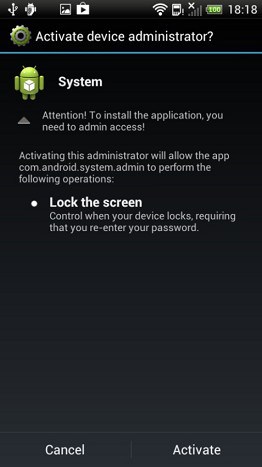
The malevolent code seems suprsingly similar to Windows malware in the respect of typical mobile threats.  The coders of the Android trojan Obad implemented multiple levels of encryption and code obfuscation to hide its source.  They also exploited several zero-day vulnerabilities in Google’s OS. The exploits permit the attackers to get total control over the victim’s device, the Android trojan is then able to acquire Device Administrator rights and hide its presence from the list of applications that have such privileges.
Android-trojan

You might also like

How Hackers Still Manage to Compromise MFA

Chinese Hackers Hijack Notepad++ Updates in 6-Month Supply Chain Campaign

Malicious Chrome Extensions Steal AI Data and Hijack Revenue in DarkSpectre Campaign

Once the Android device is infected, the Android trojan runs via stealth mode, it then functions in the background staying in direct contact with Command and Control servers (C&C) receiving commands also via SMS text messages.

Obad is able to allow the bot masters to execute commands via a remote shell implemented by the malware.  This remote shell allows to send files to all detected Bluetooth devices around the victims, it can operate as a proxy server and it is also able to block the device’s screen for up to ten seconds, to mask its activities.

Following the complete list of commands:

  • Send text message. Parameters contain number and text. Replies are deleted.
  • PING.
  • Receive account balance via USSD.
  • Act as proxy (send specified data to specified address, and communicate the response).
  • Connect to specified address (clicker).
  • Download a file from the server and install it.
  • Send a list of applications installed on the smartphone to the server.
  • Send information about an installed application specified by the C&C server.
  • Send the user’s contact data to the server.
  • Remote Shell. Executes commands in the console, as specified by thecybercriminal.
  • Send a file to all detected Bluetooth devices.

Tags: 0dayandroidgoogleinfectionmalwaremobilezero day
Previous Post

Guntior Bootkit upgraded

Next Post

Microsoft Takes down around 1,400 Citadel Botnets

Paul

Paul

Editor and chief at ZeroSecurity. Expertise includes programming, malware analysis, and penetration testing. If you would like to write for ZeroSecurity, please click "Contact us" at the bottom of the page.

Recommended For You

How Hackers Still Manage to Compromise MFA

How Hackers Still Manage to Compromise MFA

March 6, 2026
Chinese Hackers Hijack Notepad++ Updates in 6-Month Supply Chain Campaign

Chinese Hackers Hijack Notepad++ Updates in 6-Month Supply Chain Campaign

February 6, 2026

Malicious Chrome Extensions Steal AI Data and Hijack Revenue in DarkSpectre Campaign

January 30, 2026

DoubleClickjacking – The Stealthy New Web Exploit Threatening User Security

January 1, 2025

BadBox Botnet Infects Over 190,000 Android Devices Worldwide

December 20, 2024

FBI Warns of HiatusRAT Targeting Network Devices Worldwide

December 18, 2024

Related News

Malicious Chrome Extensions Steal AI Data and Hijack Revenue in DarkSpectre Campaign

Malicious Chrome Extensions Steal AI Data and Hijack Revenue in DarkSpectre Campaign

January 30, 2026
KPMG Netherlands Listed as Victim by Nova Ransomware Group

KPMG Netherlands Listed as Victim by Nova Ransomware Group

January 24, 2026
RansomHouse Claims Breach of Key Apple Assembler Luxshare

RansomHouse Claims Breach of Key Apple Assembler Luxshare

January 20, 2026
ZeroSecurity - Information Security News

We cover the latest in technology news, Crypto, Artificial Intelligence, and the threat trends impacting these sectors.

Categories

Piracy

Tutorials

Programming

Malware Analysis

Downloads

  • Contact us
  • Press
  • Writers
  • Privacy Policy
  • Terms of Service

© 2026 ZeroSecurity, All Rights Reserved.

No Result
View All Result
  • Home
  • Security
    • Tools
  • Exploits
  • Data Breaches
  • Malware
  • Privacy
  • Mobile Security
  • Contact Us
    • Press
  • Privacy Policy

© 2026 ZeroSecurity, All Rights Reserved.

This website uses cookies. By continuing to use this website you are giving consent to cookies being used. Visit our Privacy and Cookie Policy.