

ZeroSecurity - Information Security News
  • Home
  • Security
    • Exploits
    • Mobile Security
  • Malware
  • Breaches
  • Crypto
  • Privacy
  • Tech
    • AI
    • Downloads
      • Malwarebytes
      • Exploits
      • Paper Downloads
    • Reviews
No Result
View All Result
SUBSCRIBE
ZeroSecurity - Information Security News
  • Home
  • Security
    • Exploits
    • Mobile Security
  • Malware
  • Breaches
  • Crypto
  • Privacy
  • Tech
    • AI
    • Downloads
      • Malwarebytes
      • Exploits
      • Paper Downloads
    • Reviews
No Result
View All Result
ZeroSecurity - Information Security News
No Result
View All Result
Home Malware

Tor Surge due to Mevade Malware

Paul by Paul
September 17, 2013 - Updated on September 22, 2013
in Malware, Public
Reading Time: 2 mins read
mevade botnet

mevade botnet

Share on FacebookShare on Twitter

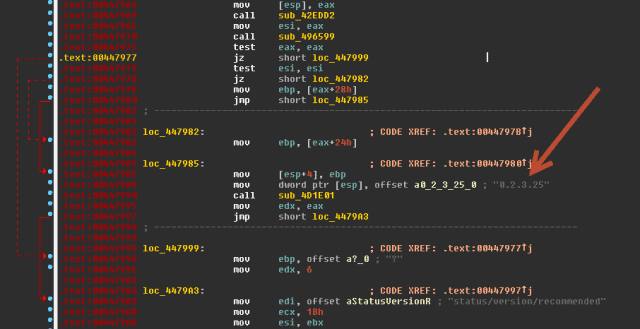
The Mevade adware was recently associated to a sudden surge of in the number of Tor users during the last month. As it turned out, Mevade downloaded a Tor component on infected computers, potentially as a support mechanism for its command and control communications.

“In addition to the Mevade malware itself, we saw that ADW_BPROTECT had also been downloaded onto affected systems,” blogged Roddell Santos, threats analyst at Trend Micro. “This is expected for Mevade, as we noted earlier that it is linked to cybercriminals responsible for the distribution of adware. This downloading of adware is consistent with our findings that the Mevade botnet is possibly monetized via installing adware and toolbars.”

You might also like

Chinese Hackers Hijack Notepad++ Updates in 6-Month Supply Chain Campaign

Malicious Chrome Extensions Steal AI Data and Hijack Revenue in DarkSpectre Campaign

DoubleClickjacking – The Stealthy New Web Exploit Threatening User Security

Trend Micro states, a batch of Mevade samples the company’s researchers analyzed were downloaded by a malicious file named FlashPlayerUpdateService.exe (detected by Trend Micro as TROJ_DLOADE.FBV) – which is the same file name as the legitimate file. However, the real updater file is signed by Adobe Systems, whereas the malicious one is not. In addition, the version numbers are different.

“The backdoor communicates to its C&C server via HTTP to receive commands, which include updating a copy of itself and connecting to a specific location using SSH to secure its communication,” Santos blogged.

“As for TROJ_DLOADE.FBV, we’ve found that the URLs it uses to access its C&C servers has the following pattern:

  • http://{malicious domain}/updater/{32 random hexadecimal characters}/{1 digit number}”

The IP addresses that host these C&C servers are located in Russia, though TROJ_DLOADE.FBV was found in multiple countries, with Japan and the United States being hit the hardest.

As for Mevade, most of the victims (95 percent) are located in the United States.

Santos recommended that users observe best practices and avoid visiting suspicious sites and downloading files. In addition, users should keep their software up-to-date.

Cross-posted from www.securityweek.com

Tags: malwareMevadetor
Previous Post

Cyber Espionage Campaign Targeting South Korea

Next Post

FBI claims that It Controlled Tor Servers Behind Compromise

Paul

Paul

Editor and chief at ZeroSecurity. Expertise includes programming, malware analysis, and penetration testing. If you would like to write for ZeroSecurity, please click "Contact us" at the bottom of the page.

Recommended For You

Chinese Hackers Hijack Notepad++ Updates in 6-Month Supply Chain Campaign

Chinese Hackers Hijack Notepad++ Updates in 6-Month Supply Chain Campaign

February 6, 2026
Malicious Chrome Extensions Steal AI Data and Hijack Revenue in DarkSpectre Campaign

Malicious Chrome Extensions Steal AI Data and Hijack Revenue in DarkSpectre Campaign

January 30, 2026

DoubleClickjacking – The Stealthy New Web Exploit Threatening User Security

January 1, 2025

BadBox Botnet Infects Over 190,000 Android Devices Worldwide

December 20, 2024

FBI Warns of HiatusRAT Targeting Network Devices Worldwide

December 18, 2024

Was Deloitte Hacked Again? Ransomware Group Claims They Did

December 9, 2024

Related News

Malicious Chrome Extensions Steal AI Data and Hijack Revenue in DarkSpectre Campaign

Malicious Chrome Extensions Steal AI Data and Hijack Revenue in DarkSpectre Campaign

January 30, 2026
KPMG Netherlands Listed as Victim by Nova Ransomware Group

KPMG Netherlands Listed as Victim by Nova Ransomware Group

January 24, 2026
RansomHouse Claims Breach of Key Apple Assembler Luxshare

RansomHouse Claims Breach of Key Apple Assembler Luxshare

January 20, 2026
ZeroSecurity - Information Security News

We cover the latest in technology news, Crypto, Artificial Intelligence, and the threat trends impacting these sectors.

Categories

Piracy

Tutorials

Programming

Malware Analysis

Downloads

  • Contact us
  • Press
  • Writers
  • Privacy Policy
  • Terms of Service

© 2026 ZeroSecurity, All Rights Reserved.

No Result
View All Result
  • Home
  • Security
    • Tools
  • Exploits
  • Data Breaches
  • Malware
  • Privacy
  • Mobile Security
  • Contact Us
    • Press
  • Privacy Policy

© 2026 ZeroSecurity, All Rights Reserved.

This website uses cookies. By continuing to use this website you are giving consent to cookies being used. Visit our Privacy and Cookie Policy.