

ZeroSecurity - Information Security News
  • Home
  • Security
    • Exploits
    • Mobile Security
  • Malware
  • Breaches
  • Crypto
  • Privacy
  • Tech
    • AI
    • Downloads
      • Malwarebytes
      • Exploits
      • Paper Downloads
    • Reviews
No Result
View All Result
SUBSCRIBE
ZeroSecurity - Information Security News
  • Home
  • Security
    • Exploits
    • Mobile Security
  • Malware
  • Breaches
  • Crypto
  • Privacy
  • Tech
    • AI
    • Downloads
      • Malwarebytes
      • Exploits
      • Paper Downloads
    • Reviews
No Result
View All Result
ZeroSecurity - Information Security News
No Result
View All Result
Home Malware

Cyber Espionage Campaign Targeting South Korea

Paul by Paul
September 16, 2013 - Updated on September 22, 2013
in Malware, Public
Reading Time: 2 mins read
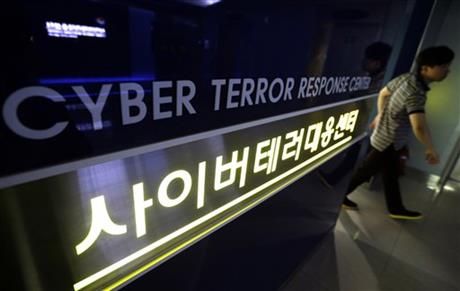
South Korea hackers
Share on FacebookShare on Twitter

Kaspersky experts have revealed a new cyber espionage effort being dubbed Kimsuky due the names “kim” used by hackers for Dropbox email accounts during in the attacks.

You might also like

Chinese Hackers Hijack Notepad++ Updates in 6-Month Supply Chain Campaign

Malicious Chrome Extensions Steal AI Data and Hijack Revenue in DarkSpectre Campaign

DoubleClickjacking – The Stealthy New Web Exploit Threatening User Security

“It’s interesting that the drop box mail accounts [email protected] and [email protected] are registered with the following “kim” names: kimsukyang and ‘Kim asdfa’.”

The Kimsuky cyber espionage campaign seems to have been developed in North Korea and hit many systems, eleven of which located in the South Korea and two in China, including the Korea Institute For Defense Analyses (KIDA), The Sejong Institute, the Hyundai Merchant Marine and the Ministry of Unification.

The researchers discovered that the campaign portrays distinctive features in its execution and logistics. The investigation started after the team of experts noticed an unsophisticated spy program that transmitted with a control server via a public email host, an approach of too many amateur malware authors.

However, there were a few things that attracted our attention:

  • The public e-mail server in question was Bulgarian – mail.bg.
  • The compilation path string contained Korean hieroglyphs.

These two facts compelled us take a closer look at this malware — Korean compilers alongside Bulgarian e-mail command-and-control communications. The complete path found in the malware presents some Korean strings:

D:\rsh\공격\UAC_dll(완성)\Release\test.pdb

The “rsh” word, by all appearances, means a shortening of “Remote Shell” and the Korean words can be translated in English as “attack” and “completion”, i.e.:

D:\rsh\ATTACK\UAC_dll(COMPLETION)\Release\test.pdb

The attackers infected victims with a malware able to remote controls the PC, logging keystrokes, stealing HWP documents and collecting directory listings. At system startup, the basic library disables the system firewall and any firewall produced by the South Korean security product vendor AhnLab.

The bot agents communicate with the C&C through the Bulgarian web-based free email server (mail.bg),  and contains the credentials for its e-mail account hardcoded into the malware itself.

All the evidences collected led security researchers to suppose that the attackers behind Kimsuky operation are based in North Korea.

Tags: cyber espionagekasperskyKimsukymalware
Previous Post

@ItsKahuna Receives 3 years after breaching police sites

Next Post

Tor Surge due to Mevade Malware

Paul

Paul

Editor and chief at ZeroSecurity. Expertise includes programming, malware analysis, and penetration testing. If you would like to write for ZeroSecurity, please click "Contact us" at the bottom of the page.

Recommended For You

Chinese Hackers Hijack Notepad++ Updates in 6-Month Supply Chain Campaign

Chinese Hackers Hijack Notepad++ Updates in 6-Month Supply Chain Campaign

February 6, 2026
Malicious Chrome Extensions Steal AI Data and Hijack Revenue in DarkSpectre Campaign

Malicious Chrome Extensions Steal AI Data and Hijack Revenue in DarkSpectre Campaign

January 30, 2026

DoubleClickjacking – The Stealthy New Web Exploit Threatening User Security

January 1, 2025

BadBox Botnet Infects Over 190,000 Android Devices Worldwide

December 20, 2024

FBI Warns of HiatusRAT Targeting Network Devices Worldwide

December 18, 2024

Was Deloitte Hacked Again? Ransomware Group Claims They Did

December 9, 2024

Related News

Malicious Chrome Extensions Steal AI Data and Hijack Revenue in DarkSpectre Campaign

Malicious Chrome Extensions Steal AI Data and Hijack Revenue in DarkSpectre Campaign

January 30, 2026
KPMG Netherlands Listed as Victim by Nova Ransomware Group

KPMG Netherlands Listed as Victim by Nova Ransomware Group

January 24, 2026
RansomHouse Claims Breach of Key Apple Assembler Luxshare

RansomHouse Claims Breach of Key Apple Assembler Luxshare

January 20, 2026
ZeroSecurity - Information Security News

We cover the latest in technology news, Crypto, Artificial Intelligence, and the threat trends impacting these sectors.

Categories

Piracy

Tutorials

Programming

Malware Analysis

Downloads

  • Contact us
  • Press
  • Writers
  • Privacy Policy
  • Terms of Service

© 2026 ZeroSecurity, All Rights Reserved.

No Result
View All Result
  • Home
  • Security
    • Tools
  • Exploits
  • Data Breaches
  • Malware
  • Privacy
  • Mobile Security
  • Contact Us
    • Press
  • Privacy Policy

© 2026 ZeroSecurity, All Rights Reserved.

This website uses cookies. By continuing to use this website you are giving consent to cookies being used. Visit our Privacy and Cookie Policy.