

ZeroSecurity - Information Security News
  • Home
  • Security
    • Exploits
    • Mobile Security
  • Malware
  • Breaches
  • Crypto
  • Privacy
  • Tech
    • AI
    • Downloads
      • Malwarebytes
      • Exploits
      • Paper Downloads
    • Reviews
No Result
View All Result
SUBSCRIBE
ZeroSecurity - Information Security News
  • Home
  • Security
    • Exploits
    • Mobile Security
  • Malware
  • Breaches
  • Crypto
  • Privacy
  • Tech
    • AI
    • Downloads
      • Malwarebytes
      • Exploits
      • Paper Downloads
    • Reviews
No Result
View All Result
ZeroSecurity - Information Security News
No Result
View All Result
Home Security Information

Sophisticated Google Drive Phishing Scam Grows larger

Paul by Paul
June 10, 2014
in Information, Security
Reading Time: 2 mins read
Google Drive
Share on FacebookShare on Twitter

Security experts at Symantec have found a new phishing system depending on Google Drive that is being utilized by hackers to steal Google Account credentials details.

Most phishing prevention techniques focus on visually checking the Hyperlink to ensure the connection is safe. This is normally good advice, however this doesn’t assist in preventing against this particular attack.

Google_drive_phising

You might also like

Hackers Exploit Maximum-Severity Cisco Zero-Day Bug Since 2023 (CVE-2026-20127)

How Hackers Still Manage to Compromise MFA

Anthropic Unveils Claude Code Security to Detect and Fix Critical Vulnerabilities

Symantec recently released a news post to notify users on a new innovative Google Drive phishing scam, and in this case scammers used a phishing message using a simple subject of “Documents” and containing a URL aiming to a phishing page hosted on the Google Drive.

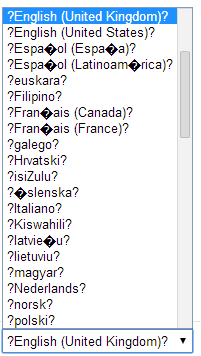
With this example, the phishers have made a small mistake. Towards the end corner of the page, there is a dialect selection box. For an individual who’s conscious this could be a warning sign that something is wrong. It seems the phishers have mistakenly corrupted the page, as some language labels are shown as a question mark on both sides:
Google_drive_phishingscam2


“This corruption is probably because Google lists languages in their native scripts: for example, Korean is listed in a language dropdown using the native Korean alphabet of Hangul: 한국어. When phishers saved a copy of the Google login page, they likely inadvertently changed the character encoding from UTF-8 to ISO-8859-1 (Latin-1), causing this corruption in the display.” Symantec said in their blog post.

Of course, a lot of victims might not recognize this problem on the page as it’s within a dropdown located in the corner and doesn’t stick out. Even when a target did spot the corrupted display, they may dismiss it as being a minimal bug or a issue with their own personal computer, and proceed to login to the phishing site exposing their credentials to attackers.

Symantec also suggests users of Google enable two-factor authentication to prevent any future attacks.

Tags: Google AccountGoogle Drivephishingscam
Previous Post

NSA intercepting U.S. Routers

Next Post

Mozilla Leaks 76,000 developer credentials

Paul

Paul

Editor and chief at ZeroSecurity. Expertise includes programming, malware analysis, and penetration testing. If you would like to write for ZeroSecurity, please click "Contact us" at the bottom of the page.

Recommended For You

Photo of the CISCO logo and text saying "You have been hacked!"

Hackers Exploit Maximum-Severity Cisco Zero-Day Bug Since 2023 (CVE-2026-20127)

March 6, 2026
How Hackers Still Manage to Compromise MFA

How Hackers Still Manage to Compromise MFA

March 6, 2026

Anthropic Unveils Claude Code Security to Detect and Fix Critical Vulnerabilities

February 22, 2026

Phishing 2.0: How AI is Turning Cyber Attacks into a Science

January 7, 2025 - Updated on January 9, 2025

Ransomware Attack Cripples PIH Health Whittier Hospital

December 6, 2024

Cybercriminals Unleash Advanced Phishing-as-a-Service Toolkit Targeting Microsoft 365 Users

November 29, 2024

Related News

Malicious Chrome Extensions Steal AI Data and Hijack Revenue in DarkSpectre Campaign

Malicious Chrome Extensions Steal AI Data and Hijack Revenue in DarkSpectre Campaign

January 30, 2026
KPMG Netherlands Listed as Victim by Nova Ransomware Group

KPMG Netherlands Listed as Victim by Nova Ransomware Group

January 24, 2026
RansomHouse Claims Breach of Key Apple Assembler Luxshare

RansomHouse Claims Breach of Key Apple Assembler Luxshare

January 20, 2026
ZeroSecurity - Information Security News

We cover the latest in technology news, Crypto, Artificial Intelligence, and the threat trends impacting these sectors.

Categories

Piracy

Tutorials

Programming

Malware Analysis

Downloads

  • Contact us
  • Press
  • Writers
  • Privacy Policy
  • Terms of Service

© 2026 ZeroSecurity, All Rights Reserved.

No Result
View All Result
  • Home
  • Security
    • Tools
  • Exploits
  • Data Breaches
  • Malware
  • Privacy
  • Mobile Security
  • Contact Us
    • Press
  • Privacy Policy

© 2026 ZeroSecurity, All Rights Reserved.

This website uses cookies. By continuing to use this website you are giving consent to cookies being used. Visit our Privacy and Cookie Policy.