
ZeroSecurity - Information Security News
  • Home
  • Security
    • Exploits
    • Mobile Security
  • Malware
  • Breaches
  • Crypto
  • Privacy
  • Tech
    • AI
    • Downloads
      • Malwarebytes
      • Exploits
      • Paper Downloads
    • Reviews
No Result
View All Result
SUBSCRIBE
ZeroSecurity - Information Security News
  • Home
  • Security
    • Exploits
    • Mobile Security
  • Malware
  • Breaches
  • Crypto
  • Privacy
  • Tech
    • AI
    • Downloads
      • Malwarebytes
      • Exploits
      • Paper Downloads
    • Reviews
No Result
View All Result
ZeroSecurity - Information Security News
No Result
View All Result
Home Security

Over 10 million systems found exploitable

Kyle by Kyle
June 9, 2016
in Security, Exploits
Reading Time: 1 min read
Rapid7 Project sonar
Share on FacebookShare on Twitter

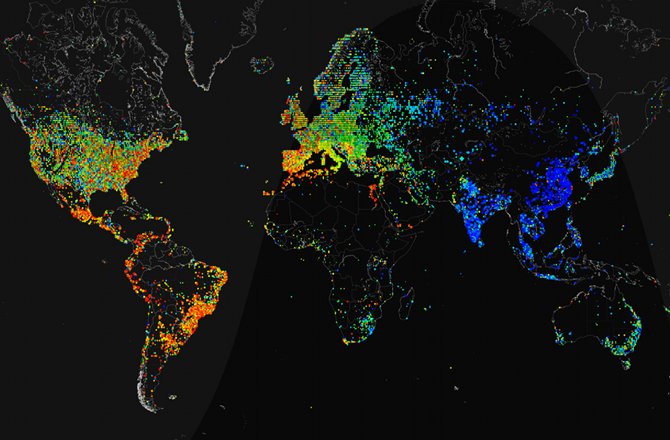
Around 10 million systems globally have their databases at risk and countless nodes leave telnet, printer, and other ports open, based on new info from Rapid7’s Project Sonar.

The huge port-scanning venture also discovered that countries with the most significant gross national product (GDP) also leave the most ports open with effortlessly intercepted and unencrypted communications: the US, China, France, and Russia, are on top of that list, according to Rapid7’s report.

You might also like

Hackers Exploit Maximum-Severity Cisco Zero-Day Bug Since 2023 (CVE-2026-20127)

How Hackers Still Manage to Compromise MFA

Anthropic Unveils Claude Code Security to Detect and Fix Critical Vulnerabilities

The report includes many of their key findings and astounding statistics.

“Millions of systems on the internet offer services that should not be exposed to the public network. Our survey uncovered 15 million nodes appearing to offer telnet, 11.2 million appearing to offer direct access to relational databases, and 4.5 million apparent printer services.”

I’m always surprised how many services there are on the Net that have no business being there,” stated Rapid7’s senior security research manager, Tod Beardsley, who led Project Sonar. “Today when you have 40% of humans on the Internet and you’re exposing direct access to databases, that seems like such a bad idea.”

The report is only the initial step of an in-depth worldwide project for Project Sonar, he states. There are 42 million public IP nodes in addition to 592 million private or reserved IP addresses that Project Sonar wasn’t permitted to test due to the IPs’ “do not scan” requests, but Rapid7 guesses that in total, it scanned 146 million individual IPv4 addresses, which makes up approximately 20 to 40% of the address space.

Tags: project sonarrapid7
Previous Post

New FastPOS malware targeting Point-of-Sale systems

Next Post

32 Million Twitter accounts go up for sale on the Darknet

Kyle

Kyle

Writer, and editor at ZeroSecurity. Interested in Information Security, the Blockchain, and an overall tech enthusiast. "Formal education will make you a living; self-education will make you a fortune." Contact me here: [email protected]

Recommended For You

Photo of the CISCO logo and text saying "You have been hacked!"

Hackers Exploit Maximum-Severity Cisco Zero-Day Bug Since 2023 (CVE-2026-20127)

March 6, 2026
How Hackers Still Manage to Compromise MFA

How Hackers Still Manage to Compromise MFA

March 6, 2026

Anthropic Unveils Claude Code Security to Detect and Fix Critical Vulnerabilities

February 22, 2026

Phishing 2.0: How AI is Turning Cyber Attacks into a Science

January 7, 2025 - Updated on January 9, 2025

DoubleClickjacking – The Stealthy New Web Exploit Threatening User Security

January 1, 2025

Critical Vulnerabilities Exposed in Ruijie Networks Cloud Platform

December 25, 2024

Related News

Malicious Chrome Extensions Steal AI Data and Hijack Revenue in DarkSpectre Campaign

Malicious Chrome Extensions Steal AI Data and Hijack Revenue in DarkSpectre Campaign

January 30, 2026
KPMG Netherlands Listed as Victim by Nova Ransomware Group

KPMG Netherlands Listed as Victim by Nova Ransomware Group

January 24, 2026
RansomHouse Claims Breach of Key Apple Assembler Luxshare

RansomHouse Claims Breach of Key Apple Assembler Luxshare

January 20, 2026
ZeroSecurity - Information Security News

We cover the latest in technology news, Crypto, Artificial Intelligence, and the threat trends impacting these sectors.

Categories

Piracy

Tutorials

Programming

Malware Analysis

Downloads

  • Contact us
  • Press
  • Writers
  • Privacy Policy
  • Terms of Service

© 2026 ZeroSecurity, All Rights Reserved.

No Result
View All Result
  • Home
  • Security
    • Tools
  • Exploits
  • Data Breaches
  • Malware
  • Privacy
  • Mobile Security
  • Contact Us
    • Press
  • Privacy Policy

© 2026 ZeroSecurity, All Rights Reserved.

This website uses cookies. By continuing to use this website you are giving consent to cookies being used. Visit our Privacy and Cookie Policy.