

ZeroSecurity - Information Security News
  • Home
  • Security
    • Exploits
    • Mobile Security
  • Malware
  • Breaches
  • Crypto
  • Privacy
  • Tech
    • AI
    • Downloads
      • Malwarebytes
      • Exploits
      • Paper Downloads
    • Reviews
No Result
View All Result
SUBSCRIBE
ZeroSecurity - Information Security News
  • Home
  • Security
    • Exploits
    • Mobile Security
  • Malware
  • Breaches
  • Crypto
  • Privacy
  • Tech
    • AI
    • Downloads
      • Malwarebytes
      • Exploits
      • Paper Downloads
    • Reviews
No Result
View All Result
ZeroSecurity - Information Security News
No Result
View All Result
Home Malware

DDoS Bot Targets Linux and Windows Machines

Paul by Paul
December 20, 2013 - Updated on January 11, 2014
in Malware
Reading Time: 2 mins read
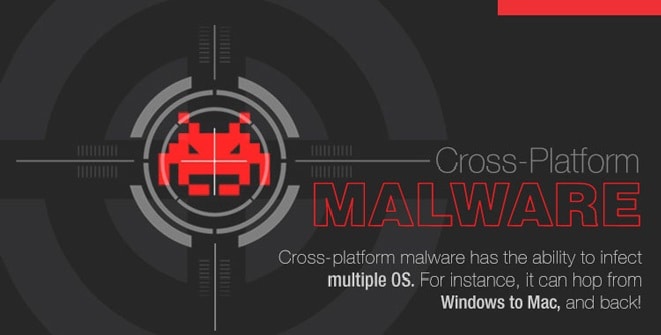
Cross PlatformMalware
Share on FacebookShare on Twitter

Attackers are targeting Unix and Windows devices to set up malware made for launching distributed denial-of-service (DDoS) attacks, as outlined by experts from the Polish Computer Emergency Response Team (CERT Polska).

The malware was discovered by the Polish CERT at the start of December and the Linux version has been implemented following successful bruteforce attacks against the SSH (Secure Shell) services. Therefore systems that permit remote SSH access from the web and have accounts with vulnerable passwords have a chance of being affected by attackers disbursing this malware.

”We were able to obtain a 32-bit, statically linked, ELF file,” the Polish CERT experts wrote Monday in a blog post. The application works in daemon mode and joins a command-and-control (C&C) server utilizing a hard-coded  IP address and port, they stated.

On first execution, the malware delivers system data back to the C&C server and stays connected until further instructions, the usual characteristics of a botnet.

”From the analysis we were able to determine that there are four types of attack possible, each of them a DDoS attack on the defined target,” the experts stated. “One of the possibilities is the DNS Amplification attack, in which a request, containing 256 random or previously defined queries, is sent to a DNS server.  There are also other, unimplemented functions, which probably are meant to utilize the HTTP protocol in order to perform a DDoS attack.”

The malware provides system data back to the C&C host about the running proccesses, the CPU speed, system load and network speed.

A variation of the DDoS malware also is available for Windows systems where it’s installed as “C:\Program Files\DbProtectSupport\svchost.exe” and is also designed to run as a service on system startup.

You might also like

Chinese Hackers Hijack Notepad++ Updates in 6-Month Supply Chain Campaign

Malicious Chrome Extensions Steal AI Data and Hijack Revenue in DarkSpectre Campaign

DoubleClickjacking – The Stealthy New Web Exploit Threatening User Security

Because this malware was created mainly for DDoS attacks, the attackers behind it are most likely wanting to compromise hosts with sizeable network bandwidths, like servers. “This also probably is the reason why there are two versions of the bot-Linux operating systems are a popular choice for server machines,”  the researchers added.

”Most servers that are injected with these various scripts are then used for a variety of tasks, including DDoS, vulnerability scanning, and exploiting,” DiMino said Tuesday in post that delivers an in depth analysis of the attack. “The mining of virtual currency is now often seen running in the background during the attacker’s ‘downtime’.”

Tags: Denial-of-service attacklinuxmalwareSSHworm
Previous Post

New BitTorrent Peer 2 Peer chat in development

Next Post

openSUSE Forum’s Breached via VBulletin 0day

Paul

Paul

Editor and chief at ZeroSecurity. Expertise includes programming, malware analysis, and penetration testing. If you would like to write for ZeroSecurity, please click "Contact us" at the bottom of the page.

Recommended For You

Chinese Hackers Hijack Notepad++ Updates in 6-Month Supply Chain Campaign

Chinese Hackers Hijack Notepad++ Updates in 6-Month Supply Chain Campaign

February 6, 2026
Malicious Chrome Extensions Steal AI Data and Hijack Revenue in DarkSpectre Campaign

Malicious Chrome Extensions Steal AI Data and Hijack Revenue in DarkSpectre Campaign

January 30, 2026

DoubleClickjacking – The Stealthy New Web Exploit Threatening User Security

January 1, 2025

BadBox Botnet Infects Over 190,000 Android Devices Worldwide

December 20, 2024

FBI Warns of HiatusRAT Targeting Network Devices Worldwide

December 18, 2024

Was Deloitte Hacked Again? Ransomware Group Claims They Did

December 9, 2024

Related News

Malicious Chrome Extensions Steal AI Data and Hijack Revenue in DarkSpectre Campaign

Malicious Chrome Extensions Steal AI Data and Hijack Revenue in DarkSpectre Campaign

January 30, 2026
KPMG Netherlands Listed as Victim by Nova Ransomware Group

KPMG Netherlands Listed as Victim by Nova Ransomware Group

January 24, 2026
RansomHouse Claims Breach of Key Apple Assembler Luxshare

RansomHouse Claims Breach of Key Apple Assembler Luxshare

January 20, 2026
ZeroSecurity - Information Security News

We cover the latest in technology news, Crypto, Artificial Intelligence, and the threat trends impacting these sectors.

Categories

Piracy

Tutorials

Programming

Malware Analysis

Downloads

  • Contact us
  • Press
  • Writers
  • Privacy Policy
  • Terms of Service

© 2026 ZeroSecurity, All Rights Reserved.

No Result
View All Result
  • Home
  • Security
    • Tools
  • Exploits
  • Data Breaches
  • Malware
  • Privacy
  • Mobile Security
  • Contact Us
    • Press
  • Privacy Policy

© 2026 ZeroSecurity, All Rights Reserved.

This website uses cookies. By continuing to use this website you are giving consent to cookies being used. Visit our Privacy and Cookie Policy.