

ZeroSecurity - Information Security News
  • Home
  • Security
    • Exploits
    • Mobile Security
  • Malware
  • Breaches
  • Crypto
  • Privacy
  • Tech
    • AI
    • Downloads
      • Malwarebytes
      • Exploits
      • Paper Downloads
    • Reviews
No Result
View All Result
SUBSCRIBE
ZeroSecurity - Information Security News
  • Home
  • Security
    • Exploits
    • Mobile Security
  • Malware
  • Breaches
  • Crypto
  • Privacy
  • Tech
    • AI
    • Downloads
      • Malwarebytes
      • Exploits
      • Paper Downloads
    • Reviews
No Result
View All Result
ZeroSecurity - Information Security News
No Result
View All Result
Home Malware

Google’s “GO” Programming Language used by Malware Coders

Paul by Paul
September 23, 2012
in Malware
Reading Time: 2 mins read
Share on FacebookShare on Twitter

Researchers at Symantec have discovered malware that has been written using Google’s Go programming language.

You might also like

Chinese Hackers Hijack Notepad++ Updates in 6-Month Supply Chain Campaign

Malicious Chrome Extensions Steal AI Data and Hijack Revenue in DarkSpectre Campaign

DoubleClickjacking – The Stealthy New Web Exploit Threatening User Security

Go was introduced by Google in 2009, two years after its initial design, and Symantec’s discovery seems to be the first time a malicious application has been found that was developed using the programming language.
GalaxyNxRoot

Google’s Go has been gaining a decent amount of attention over the last three years, and it seems as if criminals have taken notice.

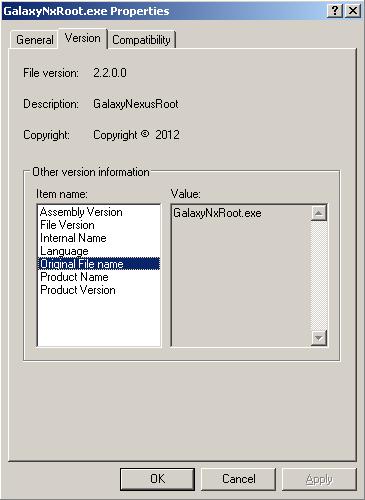
Symantec captured a sample of what they’re calling Encriyoko recently, which has elements coded with Go. The malware itself is presented as a rooting tool for the Galaxy Nexus, and if users were to install it, the .exe will drop two files on the system.

According to the researchers who examined the Trojan, the two files instigate two different attacks on a
One is an information stealing Trojan, which harvests data and ships it off to a remote server, and the other files will encrypt various file formats, including cpp, jpg, doc, php, java, wma, rar, zip, etc. In all, more than 40 file extensions are targeted by the malware. “Restoration of the encrypted files will be difficult, if not impossible,” Symantec noted.compromised host once installed.

“Go is an attempt to combine the ease of programming of an interpreted, dynamically typed language with the efficiency and safety of a statically typed, compiled language,” Google explains. “It also aims to be modern, with support for networked and multicore computing.”

Go looks like C, but is forgiving in its syntax in some aspects.

For the curious, Google has an interactive tour available for Go available here.

Cross-Posted: http://www.securityweek.com/malware-discovered-developed-googles-go-programming-language

Tags: gogoogle GOgoogle'smalwareprogramming languagevirus
Previous Post

Windows 8 Flash bugs patched

Next Post

Megaupload’s site 90% done Kimdotcom announces

Paul

Paul

Editor and chief at ZeroSecurity. Expertise includes programming, malware analysis, and penetration testing. If you would like to write for ZeroSecurity, please click "Contact us" at the bottom of the page.

Recommended For You

Chinese Hackers Hijack Notepad++ Updates in 6-Month Supply Chain Campaign

Chinese Hackers Hijack Notepad++ Updates in 6-Month Supply Chain Campaign

February 6, 2026
Malicious Chrome Extensions Steal AI Data and Hijack Revenue in DarkSpectre Campaign

Malicious Chrome Extensions Steal AI Data and Hijack Revenue in DarkSpectre Campaign

January 30, 2026

DoubleClickjacking – The Stealthy New Web Exploit Threatening User Security

January 1, 2025

BadBox Botnet Infects Over 190,000 Android Devices Worldwide

December 20, 2024

FBI Warns of HiatusRAT Targeting Network Devices Worldwide

December 18, 2024

Was Deloitte Hacked Again? Ransomware Group Claims They Did

December 9, 2024
Please login to join discussion

Related News

Malicious Chrome Extensions Steal AI Data and Hijack Revenue in DarkSpectre Campaign

Malicious Chrome Extensions Steal AI Data and Hijack Revenue in DarkSpectre Campaign

January 30, 2026
KPMG Netherlands Listed as Victim by Nova Ransomware Group

KPMG Netherlands Listed as Victim by Nova Ransomware Group

January 24, 2026
RansomHouse Claims Breach of Key Apple Assembler Luxshare

RansomHouse Claims Breach of Key Apple Assembler Luxshare

January 20, 2026
ZeroSecurity - Information Security News

We cover the latest in technology news, Crypto, Artificial Intelligence, and the threat trends impacting these sectors.

Categories

Piracy

Tutorials

Programming

Malware Analysis

Downloads

  • Contact us
  • Press
  • Writers
  • Privacy Policy
  • Terms of Service

© 2026 ZeroSecurity, All Rights Reserved.

No Result
View All Result
  • Home
  • Security
    • Tools
  • Exploits
  • Data Breaches
  • Malware
  • Privacy
  • Mobile Security
  • Contact Us
    • Press
  • Privacy Policy

© 2026 ZeroSecurity, All Rights Reserved.

This website uses cookies. By continuing to use this website you are giving consent to cookies being used. Visit our Privacy and Cookie Policy.