


ZeroSecurity - Information Security News
  • Home
  • Security
    • Exploits
    • Mobile Security
  • Malware
  • Breaches
  • Crypto
  • Privacy
  • Tech
    • AI
    • Downloads
      • Malwarebytes
      • Exploits
      • Paper Downloads
    • Reviews
No Result
View All Result
SUBSCRIBE
ZeroSecurity - Information Security News
  • Home
  • Security
    • Exploits
    • Mobile Security
  • Malware
  • Breaches
  • Crypto
  • Privacy
  • Tech
    • AI
    • Downloads
      • Malwarebytes
      • Exploits
      • Paper Downloads
    • Reviews
No Result
View All Result
ZeroSecurity - Information Security News
No Result
View All Result
Home Mobile Security

Android is getting firmware level security improvements

Google is finally making improvements to Android's security by apply hardening updates at the firmware level

Paul by Paul
February 22, 2023
in Mobile Security
Reading Time: 2 mins read
google hardens android kernal
Share on FacebookShare on Twitter

Android is the most widely used mobile operating system in the world, but it is also the most challenging to protect against evolving security threats. Google is working to improve Android’s security by implementing firmware-level security features, which may come with a performance cost.

Google is aiming to enhance the security of its Android operating system by reinforcing it at the hardware level. This aligns with the current trend of securing less visible components of the software stack to add more layers of protection against modern cyber threats.

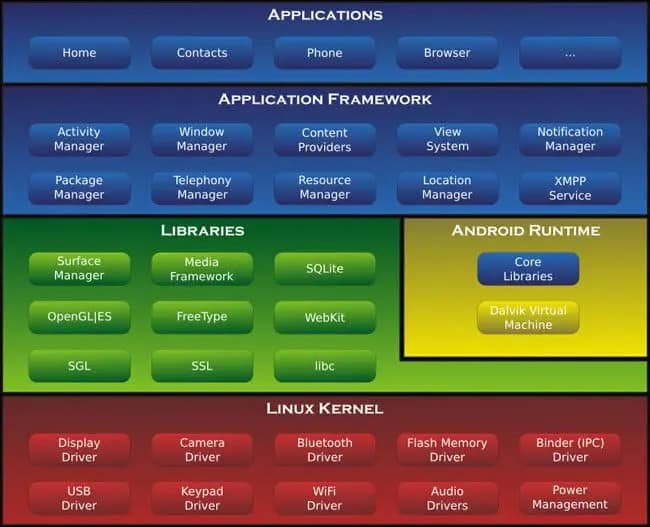
All Android devices run on Systems-on-Chip (SoCs), which consists of multi-core processors, including application processors, specialized processors for images, video, security, and cellular communication, and are governed by firmware. Malicious actors are increasingly targeting this part of the software stack by finding vulnerabilities that can be exploited remotely, which is a significant concern for companies like Google, which coordinates with a large number of OEM partners to distribute security fixes quickly and efficiently.
You might also like

How Hackers Still Manage to Compromise MFA

BadBox Botnet Infects Over 190,000 Android Devices Worldwide

Massive Backdoor Infection Hits 1.3 Million Android-Based Streaming Devices

kernel in android

Google has a multi-faceted approach to improving Android’s security. Firstly, it intends to introduce a protection mechanism in the form of compiler-based sanitizers that can detect memory safety issues early in the software development process.

Secondly, Google plans to collaborate with hardware partners to include memory safety features at the firmware level. These features will prevent any critical memory errors and include a mechanism that deletes memory pages before they can be allocated by an app. This ensures that random data left behind by a different app is entirely erased.

Lastly, the company will incorporate a series of mitigations designed to make it more challenging for hackers to exploit unknown bugs. One drawback of these mitigations is that they may reduce performance, as not all parts of an SoC have the same resources. Google acknowledges that striking a balance between performance and security will be a challenge moving forward but emphasizes that optimizations can be made.

The fragmentation of the Android ecosystem remains one of Google’s most significant security concerns. Although the company has made considerable efforts to write almost all new code for Android versions 12 and higher in memory-safe languages like Rust, user adoption has been relatively slow. Additionally, malware creators can easily bypass Android security measures using stolen Platform certificates.


Tags: androidgoogle
Previous Post

New iOS and iPadOS update pushed to fix zero-day bugs

Next Post

$1 Million+ USD stolen from Algorand users

Paul

Paul

Editor and chief at ZeroSecurity. Expertise includes programming, malware analysis, and penetration testing. If you would like to write for ZeroSecurity, please click "Contact us" at the bottom of the page.

Recommended For You

How Hackers Still Manage to Compromise MFA

How Hackers Still Manage to Compromise MFA

March 6, 2026
Discover how the BadBox botnet infects 190,000+ Android devices, compromising smart TVs and smartphones across multiple countries with dangerous malware.

BadBox Botnet Infects Over 190,000 Android Devices Worldwide

December 20, 2024

Massive Backdoor Infection Hits 1.3 Million Android-Based Streaming Devices

September 16, 2024

Cybercriminals Target Mobile Users in the Czech Republic with Phishing Campaigns Leveraging Progressive Web Applications

August 20, 2024

LianSpy: New Android Spyware Targeting Russian Users

August 7, 2024

New Mandrake Android Malware Variant Evades Detection on Google Play

July 29, 2024

Related News

Malicious Chrome Extensions Steal AI Data and Hijack Revenue in DarkSpectre Campaign

Malicious Chrome Extensions Steal AI Data and Hijack Revenue in DarkSpectre Campaign

January 30, 2026
KPMG Netherlands Listed as Victim by Nova Ransomware Group

KPMG Netherlands Listed as Victim by Nova Ransomware Group

January 24, 2026
RansomHouse Claims Breach of Key Apple Assembler Luxshare

RansomHouse Claims Breach of Key Apple Assembler Luxshare

January 20, 2026
ZeroSecurity - Information Security News

We cover the latest in technology news, Crypto, Artificial Intelligence, and the threat trends impacting these sectors.

Categories

Piracy

Tutorials

Programming

Malware Analysis

Downloads

  • Contact us
  • Press
  • Writers
  • Privacy Policy
  • Terms of Service

© 2026 ZeroSecurity, All Rights Reserved.

No Result
View All Result
  • Home
  • Security
    • Tools
  • Exploits
  • Data Breaches
  • Malware
  • Privacy
  • Mobile Security
  • Contact Us
    • Press
  • Privacy Policy

© 2026 ZeroSecurity, All Rights Reserved.

This website uses cookies. By continuing to use this website you are giving consent to cookies being used. Visit our Privacy and Cookie Policy.