

ZeroSecurity - Information Security News
  • Home
  • Security
    • Exploits
    • Mobile Security
  • Malware
  • Breaches
  • Crypto
  • Privacy
  • Tech
    • AI
    • Downloads
      • Malwarebytes
      • Exploits
      • Paper Downloads
    • Reviews
No Result
View All Result
SUBSCRIBE
ZeroSecurity - Information Security News
  • Home
  • Security
    • Exploits
    • Mobile Security
  • Malware
  • Breaches
  • Crypto
  • Privacy
  • Tech
    • AI
    • Downloads
      • Malwarebytes
      • Exploits
      • Paper Downloads
    • Reviews
No Result
View All Result
ZeroSecurity - Information Security News
No Result
View All Result
Home Malware

Syslogk Linux Rootkit triggers with magic packets

Christi by Christi
June 19, 2022 - Updated on June 20, 2022
in Malware
Reading Time: 3 mins read
syslogk Linux Rootkit
Share on FacebookShare on Twitter

Avast researchers have spotted a Linux rootkit that has the ability to hide malicious processes. The new Linux rootkit, called Syslogk, works by using magic packets to activate a dormant backdoor on the device. This rootkit has not been spotted in the wild yet as it’s still in its development stages.

What is Syslogk?

According to the researchers, Syslogk is a Linux rootkit based on Adore-Ng, a classic open-source rootkit. Initially, Adore only supported kernel 2.x, however, recent updates have made it possible to target kernel 3 and above. Adore-Ng is unique because it uses sophisticated techniques to allow attackers to deploy various process hiding actions.

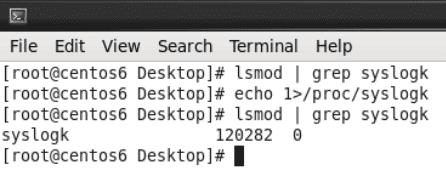
Syslogk rootkit installs itself on infected devices as a kernel module. These modules can intercept Linux commands in real-time to perform the process hiding. It’s often hard to identify Syslogk once it’s loaded as a kernel module due to the rootkit eliminating its entry from the installed modules list. The only way to identify the presence of the rootkit is via an interface, which the proc_write function exposes. You can find this interface in the /proc file system.
You might also like

Chinese Hackers Hijack Notepad++ Updates in 6-Month Supply Chain Campaign

Malicious Chrome Extensions Steal AI Data and Hijack Revenue in DarkSpectre Campaign

DoubleClickjacking – The Stealthy New Web Exploit Threatening User Security

Syslogk interface
Syslogk Interface, source: Avast

What is Rekoobe?

Syslogk can hide various directories, processes, and network traffic on the affected devices. Apart from that, this rootkit can also inspect all TCP traffic, stop payloads and start payloads remotely on demand.

Furthermore, Syslogk can load Rekoobe, a backdoor designed based on an open-source Unix backdoor called TinySHell. Rekoobe functions primarily by providing an attacker with a remote shell on the affected device.
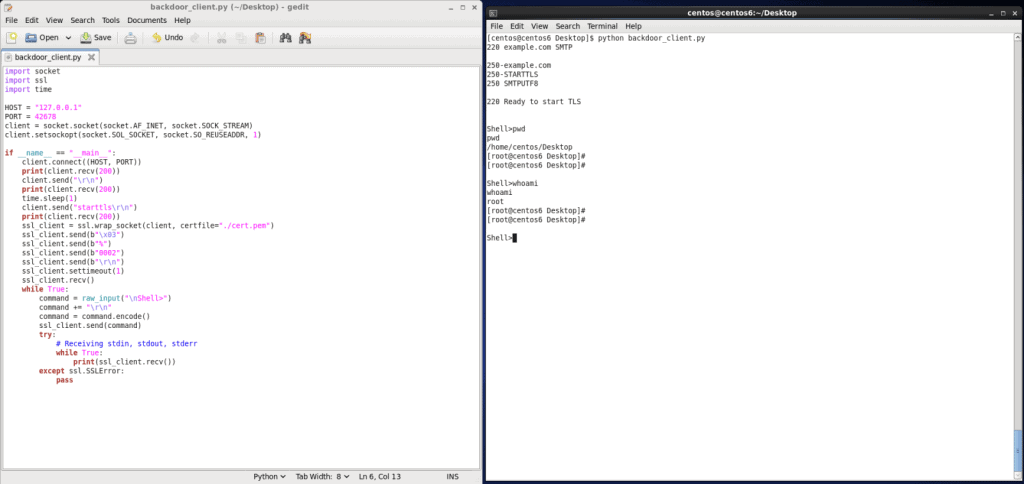
Rekoobe spawning shell Syslogk
Root shell being spawned on the infected host, source: Avast

Syslogk’s ability to load Rekoobe is only possible with the help of magic packets sent from the threat actors. Without these magic packets, the Rekoobe backdoor will continue to lay dormant on the compromised device. However, once the rootkit receives the magic packets, it’ll stop/start the backdoor and will normally fly under the radar from any security services/manual audits.

As mentioned earlier, the discovery of Syslogk came from Avast researchers. Here’s what the researchers said about the new rootkit:

“We observed that the Syslogk rootkit (and Rekoobe payload) perfectly align when used covertly in conjunction with a fake SMTP server. Consider how stealthy this could be; a backdoor that does not load until some magic packets are sent to the machine. When queried, it appears to be a legitimate service hidden in memory, hidden on disk, remotely ‘magically’ executed, hidden on the network. Even if it is found during a network port scan, it still seems to be a legitimate SMTP server.”

How does Syslogk hide malicious payloads?

As mentioned earlier, Syslogk can hide malicious payloads on compromised devices. For the rootkit to perform this function, it needs to take a few actions. These actions include:

  • Syslogk has an “hk_proc_readdir function”. This function helps to conceal the directories which contain the malicious files.
  • Another function you need to know about is the hk_getpr function. It is responsible for hiding all the malicious processes.
  • Syslogk uses the hk_t4_seq_show function to conceal malicious payload from power tools, such as Netstat.
  • The malicious payloads remain dormant, running until the attacker uses TCP packets to execute them on demand.

Syslogk is still believed to be in its development stages. As such, it’s uncertain whether this rootkit is a threat. However, there’s a high chance that it will be deployed in real attacks in the future.

After further investigation, it looks as though the concept of this rootkit was first posted on seclist.us. The source can be found on saod003’s Github.

rootkit source script
soad003’s script written in Python, source: Seclist.us
Source: Avast's Decoded
Tags: linuxrootkit
Previous Post

Chrome Browser Extension Vytal Prevents Privacy Leaks

Next Post

Cloudflare Stops Record-Breaking DDoS

Christi

Christi

Christi began her InfoSec carrier at the Illinois Institute of Technology where she received her Bachelor of Science degree in Applied Cybersecurity and Information Technology. Her passions include learning about new threats, data breaches, running, and playing with her dog, Pablo.

Recommended For You

Chinese Hackers Hijack Notepad++ Updates in 6-Month Supply Chain Campaign

Chinese Hackers Hijack Notepad++ Updates in 6-Month Supply Chain Campaign

February 6, 2026
Malicious Chrome Extensions Steal AI Data and Hijack Revenue in DarkSpectre Campaign

Malicious Chrome Extensions Steal AI Data and Hijack Revenue in DarkSpectre Campaign

January 30, 2026

DoubleClickjacking – The Stealthy New Web Exploit Threatening User Security

January 1, 2025

BadBox Botnet Infects Over 190,000 Android Devices Worldwide

December 20, 2024

FBI Warns of HiatusRAT Targeting Network Devices Worldwide

December 18, 2024

Was Deloitte Hacked Again? Ransomware Group Claims They Did

December 9, 2024

Related News

Malicious Chrome Extensions Steal AI Data and Hijack Revenue in DarkSpectre Campaign

Malicious Chrome Extensions Steal AI Data and Hijack Revenue in DarkSpectre Campaign

January 30, 2026
KPMG Netherlands Listed as Victim by Nova Ransomware Group

KPMG Netherlands Listed as Victim by Nova Ransomware Group

January 24, 2026
RansomHouse Claims Breach of Key Apple Assembler Luxshare

RansomHouse Claims Breach of Key Apple Assembler Luxshare

January 20, 2026
ZeroSecurity - Information Security News

We cover the latest in technology news, Crypto, Artificial Intelligence, and the threat trends impacting these sectors.

Categories

Piracy

Tutorials

Programming

Malware Analysis

Downloads

  • Contact us
  • Press
  • Writers
  • Privacy Policy
  • Terms of Service

© 2026 ZeroSecurity, All Rights Reserved.

No Result
View All Result
  • Home
  • Security
    • Tools
  • Exploits
  • Data Breaches
  • Malware
  • Privacy
  • Mobile Security
  • Contact Us
    • Press
  • Privacy Policy

© 2026 ZeroSecurity, All Rights Reserved.

This website uses cookies. By continuing to use this website you are giving consent to cookies being used. Visit our Privacy and Cookie Policy.